
Intel E810-XXVDA2 f/ OCP 3.0 Internal Fiber
by Intel
£225.82from 3 retailers
GTIN00675901698153
EAN0675901698153
MPNE810XXVDA2OCP3G
Prices updated 6 Apr 2026
Compare 3 Retailers
In stockStandard delivery in 3 working days
Amazon
Check live price on Amazon.co.uk
eBay
Check availability and price on eBay.co.uk
Deals & Voucher Codes


Product Description
iWARP/RDMAiWARP delivers converged. low-latency fabric services to data centers through Remote Direct Memory Access (RDMA) over Ethernet. The key iWARP components that deliver low-latency are Kernel Bypass. Direct Data Placement. and Transport Acceleration.Intel® Data Direct I/O TechnologyIntel® Data Direct I/O Technology is a platform technology that improves I/O data processing efficiency for data delivery and data consumption from I/O devices. With Intel DDIO. Intel® Server Adapters and controllers talk directly to the processor cache without a detour via system memory. reducing latency. increasing system I/O bandwidth. and reducing power consumption.PCI-SIG* SR-IOV CapableSingle-Root I/O Virtualization (SR-IOV) involves natively (directly) sharing a single I/O resource between multiple virtual machines. SR-IOV provides a mechanism by which a Single Root Function (for example a single Ethernet Port) can appear to be multiple separate physical devices.Flexible Port PartitioningFlexible Port Partitioning (FPP) technology utilizes industry standard PCI SIG SR-IOV to efficiently divide your physical Ethernet device into multiple virtual devices. providing Quality of Service by ensuring each process is assigned to a Virtual Function and is provided a fair share of the bandwidth.Virtual Machine Device Queues (VMDq)Virtual Machine Device Queues (VMDq) is a technology designed to offload some of the switching done in the VMM (Virtual Machine Monitor) to networking hardware specifically designed for this function. VMDq drastically reduces overhead associated with I/O switching in the VMM which greatly improves throughput and overall system performance
More products from GtechPro
Browse their full range on Yorkshire.com
Related Products
Browse all Network Cards & Adaptors
TP-Link AC600 Nano Dual Band Wi-Fi Bluetooth USB Adapter
£13.94

ASUS PCE-BE92BT WiFi 7 and Bluetooth 5.4 Adapter
£73.87

TP-Link Bluetooth 5.0 Nano USB Adapter
£10.25
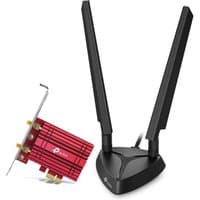
TP-Link AXE5400 Wi-Fi 6E Bluetooth 5.2 PCIe Adapter
£50.06
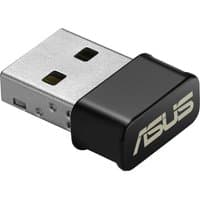
ASUS USB-AC53 Nano Wi-Fi Adaptor 867 Mbit/s
£31.68

MSI AXE5400 WiFi 6E Network Card
£57.28
From£225.82GtechPro
Buy Now